Nasr City, 52 El Tayaran Street, in front of the Health Insurance Hospital

Treatment of scoliosis in adults

Many people experience changes in spinal alignment as they age, which may be accompanied by chronic pain or difficulty with movement. This makes searching for treatment of spinal curvature in adults an essential step to maintaining quality of life and preventing complications. Choosing the appropriate treatment depends on identifying the cause of the curvature, the degree of the spinal deformity, and the symptoms experienced by the patient. Therefore, early diagnosis by a specialized physician can make a significant difference in treatment outcomes.
In this article, we will discuss treatment of spinal curvature in adults, when medical intervention is required, what adult spinal curvature is, its causes, symptoms, severity levels, and diagnosis methods. We will also cover non-surgical treatment options, the role of physical therapy and braces, cases that require surgical intervention, factors that determine the appropriate treatment plan, and answers to the most common questions about this condition. All under the supervision of Prof. Dr. Ahmed Ibrahim Salama, Consultant of Neurosurgery and Spine Surgery and Fellow of the American Spinal Deformity Association – USA. Continue reading until the end.
Treatment of Spinal Curvature in Adults in Egypt
Not all patients require surgery immediately after being diagnosed with spinal curvature. Many cases can be managed through conservative treatment methods that help relieve pain and improve mobility. The goal of treatment of spinal curvature in adults is to reduce symptoms, prevent worsening of the curvature, and improve quality of life while monitoring the condition regularly to determine whether further intervention may be needed in the future.
Therefore, the doctor relies on a comprehensive evaluation that includes the patient’s medical history, clinical examination, and imaging tests to determine the most suitable treatment plan for each case.
There are several signs indicating that a patient should consult a specialist in spine surgery, including:
-
Persistent back pain despite conservative treatment.
-
Noticeable increase in body or shoulder imbalance.
-
Difficulty standing or walking for extended periods.
-
Numbness or weakness in the legs.
-
The curvature affecting daily activities.
-
Noticeable progression of the spinal curve over time.
The earlier the condition is diagnosed, the greater the chances of controlling it with less complex treatment methods. Therefore, persistent symptoms that may indicate progression of the curvature should not be ignored.
What Is Adult Spinal Curvature and What Is the Difference Between Mild Deviation and Severe Deformity?
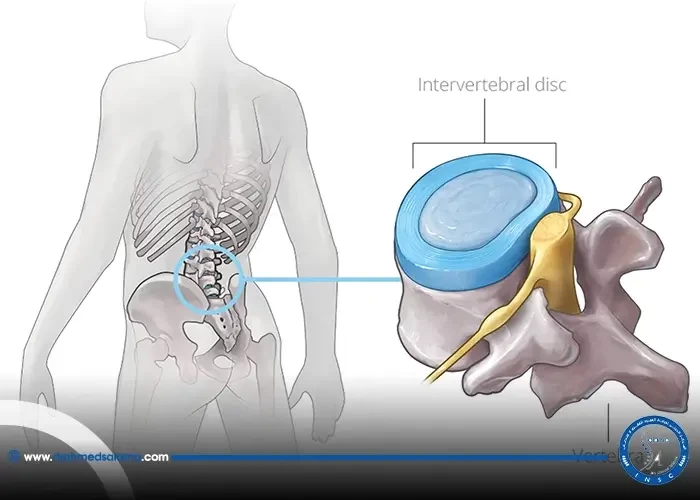
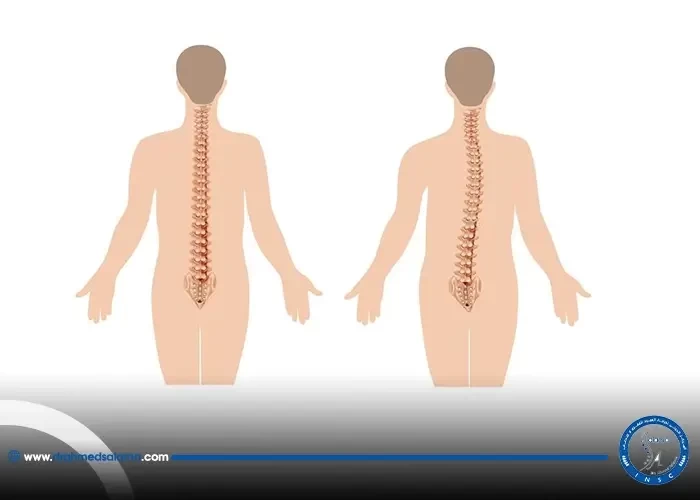
Spinal curvature is defined as an abnormal sideways curvature of the spine. It may have existed since childhood and continued into adulthood, or it may appear for the first time due to degenerative changes affecting the vertebrae and spinal discs with aging.
The approach to treatment of spinal curvature in adults varies depending on the type of curvature, its severity, and its impact on nerves, muscles, and body functions.
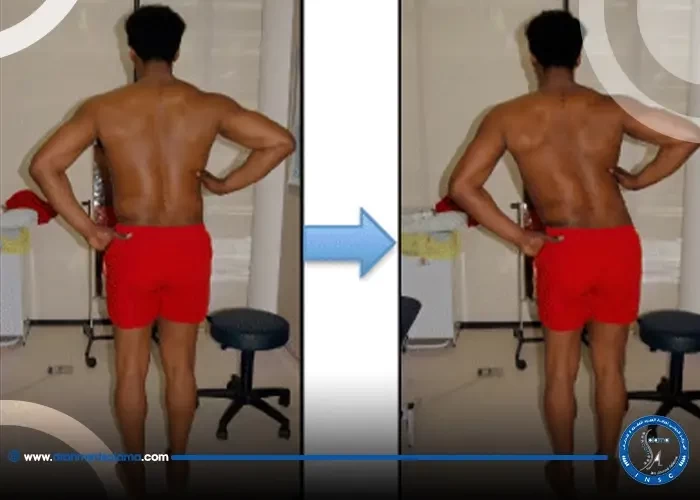
The difference between mild deviation and noticeable deformity is that mild deviation usually does not cause severe symptoms and may be discovered accidentally during imaging examinations. In contrast, severe deformity causes a clear change in body alignment and may be associated with chronic pain, nerve compression, or difficulty moving.
In such cases, treatment of spinal curvature in adults becomes more important to prevent complications and improve spinal function.
Causes of Spinal Curvature in Adults
The causes of adult spinal curvature vary widely. Therefore, the doctor begins by identifying the underlying cause before developing an appropriate treatment plan for spinal curvature in adults, as treating the cause helps improve outcomes and reduce the possibility of future deterioration.
The most common causes of spinal curvature in adults include:
-
Persistence of spinal curvature from childhood or adolescence.
-
Age-related degenerative changes.
-
Wear and tear of the discs between the vertebrae.
-
Osteoporosis affecting vertebral alignment.
-
Spinal injuries or fractures.
-
Certain neurological or muscular disorders.
-
Previous surgeries that affected spinal balance.
Having one of these causes does not necessarily mean that surgery is required. The doctor determines the type of treatment of spinal curvature in adults based on the severity of the condition and its impact on the patient’s daily life.
Symptoms of Spinal Curvature and Does It Cause Pain?
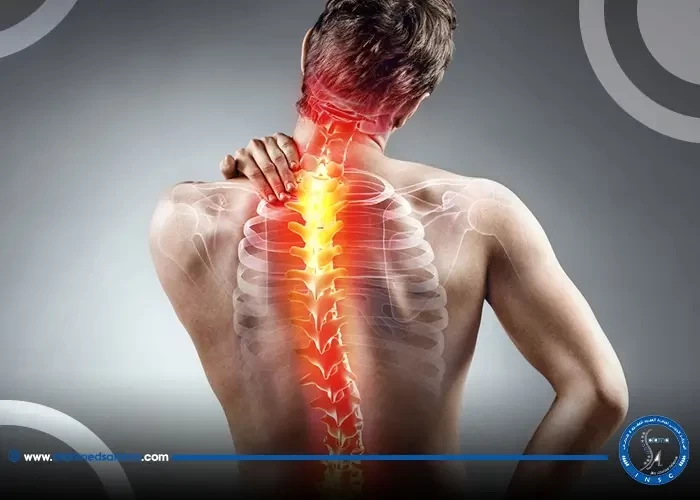
The symptoms of spinal curvature vary from one person to another. Some patients may live for years without noticeable symptoms, while others experience pain that affects their daily activities.
The success of treatment of spinal curvature in adults is closely linked to early diagnosis of symptoms before complications develop that may affect the nerves or joints.
The most common symptoms include:
-
Persistent pain in the lower or middle back.
-
Uneven shoulder height.
-
One side of the rib cage appearing more prominent.
-
The body leaning to one side.
-
Feeling fatigued after standing for long periods.
-
Numbness or weakness in the legs when the curvature compresses nerves.
-
Difficulty walking or loss of balance in advanced cases.
-
Shortness of breath in very severe curvature cases.
When these symptoms appear repeatedly, it is recommended to consult a specialist such as Prof. Dr. Ahmed Ibrahim Salama, Consultant of Neurosurgery and Spine Surgery and Fellow of the American Spinal Deformity Association – USA, to evaluate the condition and develop the appropriate treatment plan for spinal curvature in adults before the problem progresses.
Degrees of Spinal Curvature and How Is It Diagnosed?
The success of treatment of spinal curvature in adults depends on accurate diagnosis and determining the degree of curvature, as each case differs in terms of deformity severity and associated symptoms.
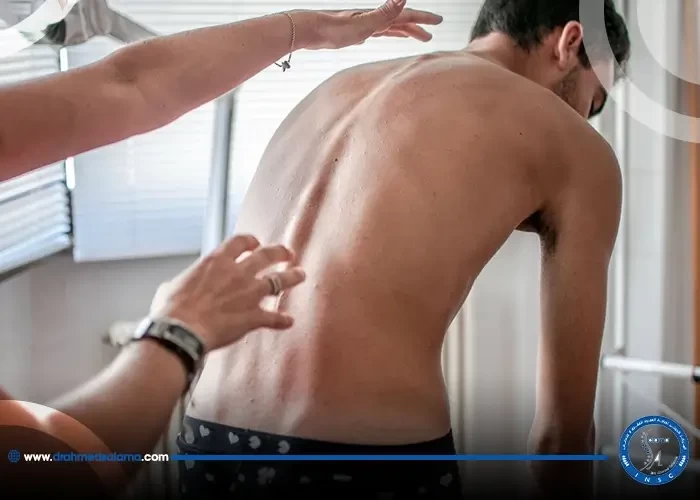
Therefore, the doctor begins by collecting the patient’s medical history, followed by a physical examination to assess spinal alignment, shoulder and pelvic position, movement limitations, and any signs indicating nerve compression. The appropriate tests are then requested to reach an accurate diagnosis that helps determine the most effective treatment plan.
Doctors rely on measuring the curvature angle through X-rays, known as the Cobb Angle, which helps determine the severity of the deformity and whether treatment or regular monitoring is required.
Additional examinations may also be requested, such as:
-
Magnetic Resonance Imaging (MRI): If there is suspicion of spinal cord or nerve compression.
-
Computed Tomography (CT scan): To evaluate the bones in certain complex cases, especially before planning surgical intervention.
This evaluation is an essential step in selecting the appropriate treatment of spinal curvature in adults for each patient.
In general, spinal curvature degrees can be classified as follows:
-
Mild spinal curvature (less than 25 degrees): The curvature is limited and usually does not cause severe symptoms.
-
Moderate spinal curvature (25 to 40 degrees): It may begin to cause pain or mild changes in body shape.
-
Severe spinal curvature (more than 40 degrees): It may lead to noticeable deformity or nerve compression and requires specialized evaluation to determine the best treatment options.
The treatment decision does not depend on the curvature degree alone. The doctor also considers the patient’s age, pain severity, progression rate of the condition, and its impact on daily activities.
Non-Surgical Treatment Methods for Spinal Curvature in Adults
Having spinal curvature does not necessarily mean that the patient will need surgery. Many cases respond well to conservative treatment, especially when the curvature is mild or moderate and does not cause severe pressure on the nerves.
The goal of non-surgical treatment of spinal curvature in adults is to relieve pain, improve mobility, strengthen the muscles supporting the spine, and limit the progression of the curvature as much as possible.
The doctor may recommend a treatment plan that combines several approaches depending on the nature of each case. The most common treatment options include:
-
Physical therapy to improve muscle strength and flexibility.
-
Performing appropriate exercises under specialist supervision.
-
Wearing a brace to reduce curvature progression and relieve pressure on the vertebrae.
-
Using pain relievers or anti-inflammatory medications when needed.
-
Managing body weight to reduce stress on the spine.
-
Modifying daily activities to avoid movements that increase pain.
-
Spinal injections in some cases to relieve pain caused by joint inflammation or nerve compression.
-
Regular imaging follow-ups to ensure that the curvature does not worsen.
Prof. Dr. Ahmed Ibrahim Salama, Consultant of Neurosurgery and Spine Surgery and Fellow of the American Spinal Deformity Association – USA, focuses on selecting the treatment methods that provide the best results for each patient according to the degree of curvature and overall health condition.
Physical Therapy and Exercises for Spinal Curvature
Physical therapy is one of the most important methods of treatment of spinal curvature in adults in cases that do not require surgery. It helps strengthen the back and abdominal muscles, improve balance, and increase spinal flexibility, which contributes to reducing pain and improving the ability to perform daily activities.
It is important that exercises are specifically designed according to the patient’s condition and performed under the supervision of a physical therapist, as unsuitable exercises may increase pain or cause muscle strain.
A physical therapy plan may include:
-
Core muscle strengthening exercises.
-
Balance and stability improvement exercises.
-
Stretching exercises to increase muscle flexibility.
-
Exercises to improve posture while standing and sitting.
-
Gradual exercise programs suitable for the patient’s age and health condition.
Although exercises do not usually correct the curvature itself, they play an important role in reducing pain and improving quality of life, making them an essential part of the treatment plan for spinal curvature in adults.
Braces and Medical Follow-Up in Mild Cases
Some patients believe that wearing a brace can correct spinal curvature in adults, but its role differs from its use in children.
In adults, braces may be used in certain cases to help reduce pain or provide additional support for the spine during daily activities. However, they do not permanently correct the curvature. Therefore, regular medical follow-up remains an essential part of the treatment of spinal curvature in adults.
Medical follow-up usually includes:
-
Monitoring curvature progression through periodic X-rays as recommended by the doctor.
-
Evaluating pain severity and its impact on daily activities.
-
Adjusting the physical therapy program when needed.
-
Assessing the effectiveness of medications or other treatment methods.
-
Determining the appropriate time for surgical intervention if the condition progresses.
Following regular appointments with the doctor helps detect any changes early, which improves the outcomes of treatment of spinal curvature in adults and reduces the possibility of future complications.
When Is Spinal Curvature Surgery Necessary?
Although many patients benefit from conservative treatment, some cases do not achieve sufficient improvement. In these situations, surgery may become the most appropriate option within the treatment plan for spinal curvature in adults.
The decision to perform surgery is not based only on the appearance of the curvature, but rather on a detailed evaluation of symptoms, deformity severity, the effect on nerves and movement, and the patient’s quality of life.
Prof. Dr. Ahmed Ibrahim Salama, Consultant of Neurosurgery and Spine Surgery and Fellow of the American Spinal Deformity Association – USA, carefully evaluates each case individually to reach the treatment decision that provides the best possible results while ensuring patient safety.
The doctor may recommend surgery in the following cases:
-
Severe persistent pain despite following conservative treatment.
-
Continuous progression of the spinal curvature over time.
-
Compression of the nerves or spinal cord.
-
Weakness or numbness in the legs due to nerve involvement.
-
Difficulty walking or loss of balance.
-
Significant impact of the curvature on daily activities.
-
Noticeable body deformity affecting spinal function.
These signs do not mean that all patients will require surgery, but they indicate the need for careful evaluation by a specialist in spine surgery.
The surgical approach varies depending on the nature of each case. However, the main goals of surgery include:
-
Correcting the curvature as much as possible.
-
Relieving pressure on the nerves if present.
-
Achieving spinal stability using modern fixation techniques when required.
Before surgery, detailed planning is performed, including imaging and necessary examinations to determine the most suitable surgical technique for each patient while considering their age, general health condition, and degree of curvature.
Modern surgical techniques help improve outcomes and reduce recovery time compared with previous methods. However, the success of the procedure also depends on the patient’s commitment to the rehabilitation program after surgery.
If you suffer from persistent pain or notice that your spinal curvature is increasing over time, do not delay medical evaluation. Schedule an appointment with Prof. Dr. Ahmed Ibrahim Salama to receive an accurate diagnosis and determine whether your condition requires conservative treatment or an appropriate surgical intervention.
Factors Affecting the Choice of Treatment for Spinal Curvature in Adults
There is no single treatment plan suitable for all patients. Therefore, choosing the appropriate treatment of spinal curvature in adults depends on several medical factors that help the doctor determine the safest and most effective option.
Even if two patients have a similar degree of curvature, their treatment plans may differ depending on symptoms, overall health condition, and treatment goals.
The most important factors affecting treatment selection include:
-
The degree of spinal curvature.
-
The severity of pain and its impact on daily life.
-
The presence of nerve or spinal cord compression.
-
The patient’s age and general health condition.
-
The rate of curvature progression over time.
-
The presence of osteoporosis or other medical conditions.
-
The patient’s response to conservative treatment.
-
The patient’s preferences and treatment goals after discussing all available options.
Prof. Dr. Ahmed Ibrahim Salama ensures that all treatment alternatives are discussed with the patient, explaining the benefits of each option and its expected risks, to help make the right decision based on the medical condition rather than relying on imaging results alone.
Contact Dr. Ahmed Salama for Spine and Neurosurgery Evaluation of Spinal Curvature
If you suffer from chronic back pain, notice changes in your body alignment, or have been diagnosed with spinal curvature, early diagnosis helps in choosing the best treatment of spinal curvature in adults before the condition progresses.
Prof. Dr. Ahmed Ibrahim Salama, Consultant of Neurosurgery and Spine Surgery and Fellow of the American Spinal Deformity Association – USA, provides a comprehensive evaluation based on clinical examination and advanced imaging techniques to identify the cause and severity of the curvature and select the most suitable treatment option for each case, whether conservative treatment or surgical intervention when needed.
Do not delay treatment until symptoms worsen. Schedule your appointment now with Prof. Dr. Ahmed Ibrahim Salama to receive an accurate diagnosis and a personalized treatment plan that helps restore mobility and return to daily activities with confidence.
Conclusion
In conclusion, treatment of spinal curvature in adults is a therapeutic journey that differs from one patient to another. Therefore, early diagnosis and choosing a specialized doctor are the most important steps toward achieving the best results.
The earlier the condition is evaluated, the greater the chances of controlling symptoms, preventing complications, and improving quality of life.
If you are looking for an accurate diagnosis and a treatment plan tailored to your condition, do not hesitate to contact Prof. Dr. Ahmed Ibrahim Salama, Consultant of Neurosurgery and Spine Surgery and Fellow of the American Spinal Deformity Association – USA, to receive specialized medical care based on the latest scientific approaches in treating spinal diseases and deformities.
Is it possible to cure scoliosis?
This depends on the cause and severity of the curvature. In many cases, symptoms can be controlled and quality of life significantly improved by treating scoliosis in adults using physical therapy, medication, or, when necessary, surgery. The goal of treatment is not only to reduce the curvature but also to relieve pain, improve mobility, and prevent further deterioration.
Is scoliosis considered a disability?
Not every patient with scoliosis is considered disabled. Many patients lead normal lives, especially with early diagnosis and adherence to a treatment plan for scoliosis in adults. Only severe cases may affect mobility or the ability to perform certain activities, and this varies from person to person depending on the degree of curvature and accompanying symptoms.
How to straighten the spine?
There are no exercises or home remedies that can restore the spine to its normal position in all cases. However, adhering to the doctor's prescribed plan, undergoing appropriate physical therapy, maintaining a healthy weight, and treating any nerve compression as needed can all help improve posture and reduce symptoms. In some advanced cases, surgical intervention is the most effective way to correct the curvature and restore spinal balance.