Nasr City, 52 El Tayaran Street, in front of the Health Insurance Hospital

Non-surgical treatment for spinal disc issues

Upon hearing the word "herniation" or "disc," many patients immediately picture surgery, operating rooms, and lengthy recovery periods, assuming that the diagnosis inevitably leads to surgical intervention. However, non-surgical options can effectively relieve pain, restore mobility, and manage symptoms without complex surgical procedures.
Treatment selection depends on the nature of the condition, the extent of nerve involvement, and the progression of symptoms over time. Early diagnosis and a tailored therapeutic strategy significantly improve clinical outcomes and help prevent disease progression.
At the center of Prof. Dr. Ahmed Ibrahim Salama, every patient undergoes a thorough clinical evaluation to identify the most suitable non-surgical treatment options for lumbar disc herniation.
Non-Surgical Lumbar Disc Treatment in Egypt: When Is It Possible?
A diagnosis of lumbar disc herniation does not mean surgery is necessary for all patients. Published studies on NCBI indicate that a significant proportion of lumbar disc herniations improve within several weeks using conservative management without surgical intervention.
Non-surgical management of lumbar disc herniation is typically viable in the following scenarios:
-
Mild to moderate cases without severe nerve root compression.
-
Manageable pain that has not persisted for prolonged periods.
-
Absence of distinct muscle weakness or motor sensory deficits.
-
Positive clinical response to anti-inflammatory medications and conservative protocols.
-
Progressive symptom improvement with physical therapy and daily activity modifications.
-
Absence of advanced neurological deficits affecting gait or balance.
Because determining the suitability of non-surgical care requires precise clinical evaluation, consult Prof. Dr. Ahmed Ibrahim Salama—Consultant of Neurosurgery and Spine Surgery, Fellow of the Scoliosis Research Society (SRS) – USA, and Member of both the Egyptian and European Societies of Neurological Surgeons—for a comprehensive diagnosis and tailored non-surgical treatment plan.
What Is a Lumbar Disc and How Does It Differ From Disc Herniation?
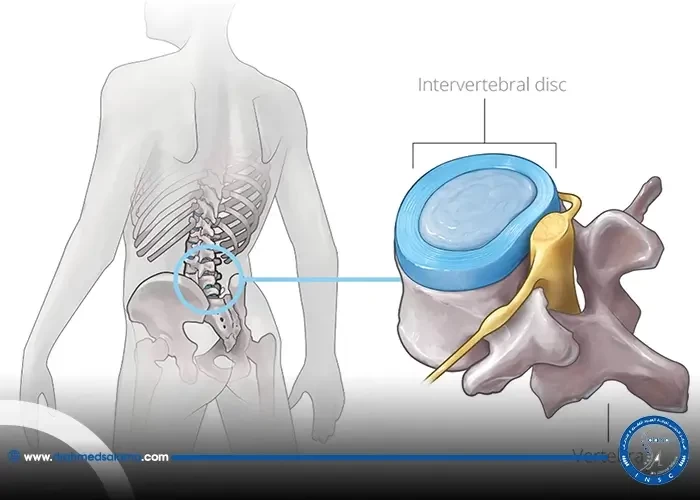
The lumbar disc is a crucial structural component of the spinal column. It consists of a flexible intervertebral disc positioned between vertebrae, acting as a shock absorber to cushion mechanical stress, minimize friction, and preserve spinal flexibility during daily movements.
A herniated disc occurs when the disc material or its inner nucleus pulposus shifts or protrudes beyond its anatomical boundaries, causing compression on adjacent spinal nerves and resulting in varying degrees of pain, numbness, or mobility impairment.
Differentiating between normal disc structure and pathological herniation is essential: intervertebral discs are normal, necessary components of spinal anatomy, whereas disc herniation is a clinical condition requiring diagnostic evaluation to determine whether conservative management or surgical intervention is appropriate based on the degree of neural compression.
Symptoms of Lumbar Disc Herniation That Indicate Severity
In non-surgical lumbar disc management, symptom presentation varies among individuals based on the precise anatomical level of herniation and the degree of nerve compression.
Key manifestations used to evaluate condition severity include:
-
Lower back pain radiating into the buttocks or down the legs.
-
Sharp or burning discomfort that intensifies with movement or specific postures.
-
Paresthesia (numbness or tingling) in the leg or foot due to nerve irritation.
-
Localized muscle weakness impairing lifting capacity or gait.
-
Exacerbation of pain during coughing, sneezing, or sudden movements.
-
Restricted capacity to perform routine daily activities.
According to Mayo Clinic insights, some cases of disc herniation remain asymptomatic, whereas pain radiating down the leg—accompanied by numbness or weakness—warrants prompt diagnostic workup to determine severity and choose between non-surgical care or surgical intervention.
If you experience persistent lower back pain above the buttocks or radiating symptoms, consult Prof. Dr. Ahmed Ibrahim Salama for a diagnostic workup before neurological complications develop.
Diagnostic Evaluation Before Selecting Treatment
Accurate diagnosis is a prerequisite prior to initiating non-surgical lumbar disc therapy. Clinical decisions cannot rely solely on reported symptoms, as lower back pain overlaps with various musculoskeletal conditions. Early diagnostic evaluation identifies the extent of nerve compression and guides personalized treatment protocols.
At the center of Prof. Dr. Ahmed Ibrahim Salama, diagnostic steps include:
-
Medical History Review: Comprehensive assessment of symptom onset, pain patterns, and progression over time.
-
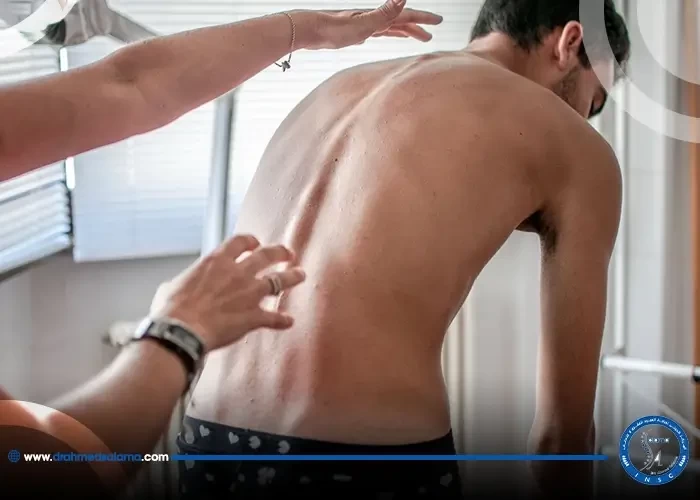
Physical Examination: Evaluating localized tenderness and the impact of spinal motion on symptoms.
-
Neurological Assessment: Testing motor muscle strength, deep tendon reflexes, sensory perception, and gait.
-
X-rays: Radiographs to rule out fractures, osseous instability, or structural deformities.
-
Magnetic Resonance Imaging (MRI): The gold standard for visualizing soft tissue disc displacement, nerve root impingement, and spinal canal compromise.
-
Computed Tomography (CT) Scans: Utilized in specific clinical scenarios for detailed osseous assessment.
-
Electromyography (EMG) & Nerve Conduction Studies: Performed when indicated to verify nerve root function and localize neural deficits.
Non-Surgical Treatment Modalities for Lumbar Disc Herniation
Selecting the appropriate conservative protocol depends on symptom severity, degree of neural involvement, and individual treatment response. Non-surgical approaches aimed at relieving pain and restoring functional movement include:
Pharmacological Therapy
Medications serve as a core component in managing acute symptoms, reducing perineural inflammation, and alleviating radicular discomfort:
-
Analgesics & NSAIDs: Acetaminophen or Ibuprofen to suppress pain and surrounding tissue inflammation.
-
Muscle Relaxants: Prescribed short-term to relieve reactive spinal muscle spasms.
-
Neuropathic Medications: Gabapentin, Pregabalin, or Duloxetine to manage nerve-related pain and paresthesia.
Note: All pharmacological interventions must be administered under direct medical supervision to optimize dosage and avoid side effects.
Physical Therapy and Targeted Exercises
Physical therapy restores functional spinal mechanics and relieves pressure on intervertebral discs through:
-
Flexibility and gentle stretching exercises.
-
Core-strengthening routines to support the lumbar spine.
-
Postural training and functional mobility exercises.
-
Therapeutic modalities such as manual therapy or electrical stimulation as indicated.
Interventional Procedures (Injections & Radiofrequency)
When symptoms persist despite conservative oral therapy and physical rehabilitation, minimally invasive interventions may be utilized:
-
Epidural Injections: Target corticosteroid or local anesthetic delivery to suppress inflammation around compromised nerve roots.
-
Radiofrequency Ablation: Application of thermal or pulsed energy to disrupt pain signal transmission along affected nerves.
Self-Care Guidelines for Lower Back Pain Management at Home
While formal medical care forms the foundation of recovery, daily habits play a key role in reducing symptoms and supporting healing.
Key guidelines recommended by Dr. Ahmed Ibrahim Salama include:
-
Applying cold packs in early acute phases to decrease inflammation, transitioning gradually to warm compresses to ease muscular tension.
-
Adopting proper posture while sitting and sleeping to reduce lumbar intradiscal pressure.
-
Avoiding heavy lifting and improper bending mechanics.
-
Maintaining an optimal body weight to decrease mechanical stress on lower back vertebrae.
-
Cessation of smoking, which negatively affects disc nutrition and tissue healing.
-
Adhering strictly to prescribed medications and scheduled follow-up visits.
-
Maintaining adequate hydration to support intervertebral disc health.
-
Using an supportive mattress and pillow that preserve natural spinal alignment.
-
Consistently performing recommended physical therapy exercises.
Is Walking Beneficial for Lumbar Disc Herniation?
Yes, walking is one of the most frequently recommended low-impact physical activities for lumbar disc management. When performed correctly and built up gradually without overexertion, gentle walking improves mobility and alleviates discomfort.
Key benefits of walking for disc herniation include:
-
Enhancing blood circulation and oxygen delivery to peri-vertebral tissues.
-
Strengthening core muscles that stabilize the spinal column.
-
Reducing mechanical load and pressure across lower lumbar segments.
-
Increasing spinal flexibility and relieving stiffness over time.
-
Lowering the likelihood of recurrent lower back episodes.
Recommendation: Begin walking gradually, avoid overexertion, and stop immediately if walking increases sharp pain or radicular symptoms.
When Is Non-Surgical Treatment Insufficient?
Although conservative non-surgical management yields high success rates, certain clinical presentations do not respond adequately. In such cases, surgical intervention becomes necessary to relieve severe neural compression, prevent neurological progression, and restore mobility.
Surgical evaluation is indicated when:
-
Severe, unremitting pain persists despite structured conservative management.
-
Progressive motor weakness or functional mobility loss develops.
-
Paresthesia or sensory numbness worsens progressively.
-
Severe spinal cord or nerve root compression is confirmed via radiological imaging.
-
Absence of improvement following comprehensive medication, physical therapy, and interventional injections.
-
Symptoms significantly restrict basic daily activities and quality of life.
In these scenarios, advanced procedures such as endoscopic or laser-assisted disc surgery may be considered based on the structural level of nerve compression.
Key Factors Influencing Non-Surgical Treatment Success
The success of non-surgical management depends on several interconnected clinical and behavioral factors:
-
Degree of disc herniation and extent of nerve root compression.
-
Promptness of diagnosis and early therapeutic intervention.
-
Patient compliance with prescribed medical protocols and physical activity restrictions.
-
Consistency in completing physical therapy sessions and core exercises.
-
Ergonomic modifications in daily activity to avoid spinal strain.
-
Weight management to reduce load on the lumbar spine.
-
Overall baseline health and absence of unmanaged medical comorbidities.
-
Precision in tailoring the treatment protocol to individual patient needs.
Guidelines for Choosing the Right Spine Specialist in Egypt
Selecting an experienced specialist is as important as choosing the treatment method itself. Accurate diagnosis and appropriate treatment planning determine overall recovery outcomes.
Consider the following criteria when selecting a specialist for non-surgical disc care:
-
Specialized expertise and formal qualifications in spine care and neurosurgery.
-
Reliance on comprehensive diagnostic workups before formulating a treatment plan.
-
Availability of diverse, non-surgical and interventional treatment options tailored to individual cases.
-
Utilization of modern, precise diagnostic and therapeutic techniques.
-
Structured clinical follow-up to evaluate recovery progression.
-
Modern medical facility standards and diagnostic equipment.
-
Verified patient experiences and clinical outcomes in similar cases.
-
Clear doctor-patient communication regarding diagnosis, prognosis, and options.
At the center of Prof. Dr. Ahmed Ibrahim Salama, patients receive comprehensive clinical evaluations and evidence-based non-surgical care designed to safely restore movement and quality of life.
Schedule a Consultation with Dr. Ahmed Salama
If you suffer from persistent lower back pain and are seeking effective non-surgical options for lumbar disc herniation, the center of Prof. Dr. Ahmed Ibrahim Salama—Consultant of Neurosurgery and Spine Surgery, Fellow of the Scoliosis Research Society (SRS) – USA, and Member of both the Egyptian and European Societies of Neurological Surgeons—provides expert spinal care.
Services provided include:
-
Precise diagnostic evaluation of herniation severity and nerve involvement.
-
Customized treatment plans tailored to individual clinical needs.
-
Minimally invasive modalities prioritizing conservative, non-surgical resolution.
-
Stepwise treatment options ranging from conservative management to advanced procedures when necessary.
-
Continuous medical follow-up to track recovery.
-
Comprehensive patient education on spine health and preventive strategies.
Diagnosis of a lumbar disc herniation does not automatically mean surgery is required. With timely diagnosis and a structured non-surgical treatment plan, pain relief and restored functional mobility are achievable. Contact the center today to begin your structured path toward spinal health.